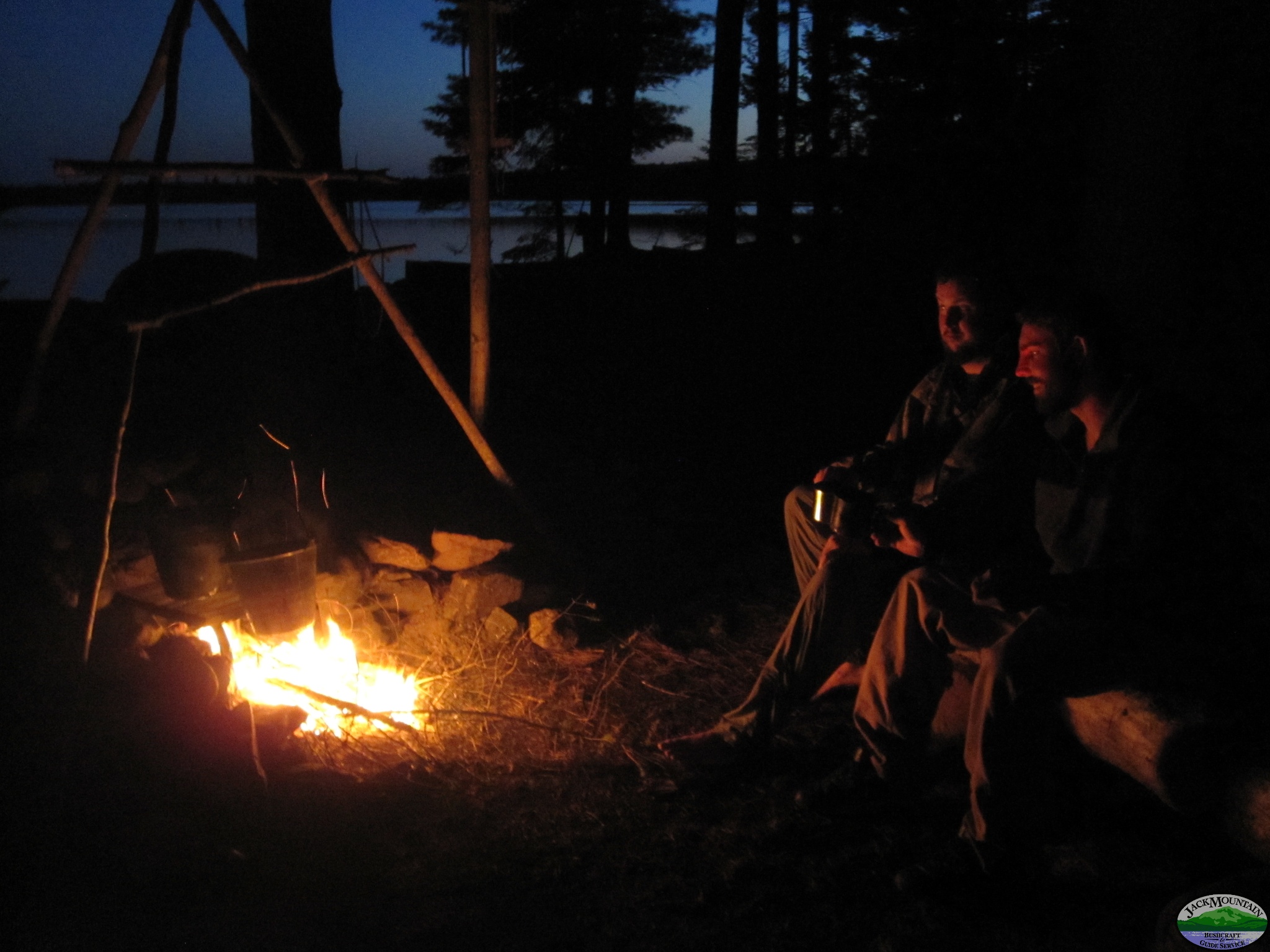
We just wrapped up the summer term at the field school. It was our 69th long-term immersion program, and we ended with several new Journeyman certificate holders. Now we’ve got a week to catch our breath before diving into the fall semester.
We’ve had typical summer weather, with some heat and only a few days of smoke from wildfires. Although we’ve had a lot of rain, it hasn’t amounted to much accumulation and the rivers are very low. We had a low water trip on the Allagash during the semester, with the last few days at around 400 cubic feet per second. This is the lowest I’ve ever run the river below the falls, but we were able to pole the entire section with only having to step out a few times to pull over gravel bars. The Aroostook river is very low as well, and the spring I recently found in the woods is still flowing, but barely. We could use a few days of soaking rain to recharge the whole system.
Apples have been on the trees for a few weeks now, and we’re into the season of plenty. One of the students, a keen forager, made some amazing choke cherry fruit leather, and I have been busy saving seeds from our local juneberries to plant for next year. I’ve also sourced some other perennials for planting, increasing the biodiversity of the field school and giving us more useful plants to forage and incorporate into life here. A really cool thing about moving and encouraging native plants is that they already live nearby. So getting them to grow in new spaces is not super difficult. A few of the success stories have been getting milkweed to grow in Moose Vegas, helping to spread the stinging nettle by the stream, getting a lot more juneberries to grow along the edges of fields and roads, and encouraging all the young apple trees that are coming up. A big seed saving project for the fall will be elderberries. We’ve got a bunch of the red-fruited elderberry growing by the guide shack, but found a big patch of black-fruited plants a few miles upriver. When the fruit is ripe I plan to harvest a bunch and save the seeds for planting. We continue to spread the jerusalem artichokes that grow along the river to new spots. And then there is wild rice. Last fall we harvested a bunch downstate and have seeded several local spots. I plan to keep at this until it begins to grown on its own around here. If you’re curious about the plants we regularly see around here, have a look at JMBS Plant List (pdf).
Things are moving forward with our field school campground planning. Starting next year we plan to offer short and long-term lodging (off-grid cabin rental, glamping, solo and group site tent camping, and van and rv parking) for those looking to experience the woods life.
Life is full, and busy. Thanks for reading.
#FullTangLifestyle
#AroostookCounty




Comments on this entry are closed.
Love the wild permaculture! Awesome book on plants! So glad to see you going strong. I want to get up there!
Recently found wild hops growing – a new one to me.
Ive had good luck propagating elderberrys from cuttings!
Thanks Bob. Propagating more elderberries from cuttings in our project list.