In the summer of 1995 I Participated in a 4-week primitive living experiment in Alaska. We built shelters, did a lot of rock-boiling in log troughs, ate a bunch of wild foods and lived in shelters we built. It was an amazing learning experience that is still paying dividends in my personal and professional life. To manage the stuff that comes out of our bodies on a regular basis, we dug pit toilets. These smelled bad and were gross. I recall the frustration I had in not knowing how to deal with what comes out of human bodies on a daily basis in a hygenic way. I reasoned that it was ridiculous that as a culture we could put a person on the moon but I didn’t know how to manage what came out of my body on a daily basis without modern infrastructure.
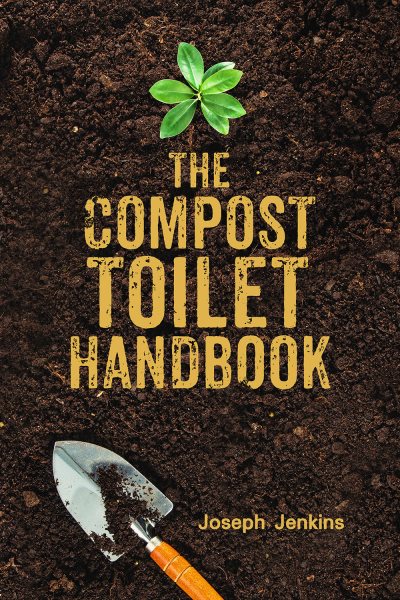
Serendipity was was my friend that year, as that fall I came across a self-published book called “The Humanure Handbook” that was all about composting what comes out of human bodies. If you’ve ever had a problem that was knawing at you, and suddently the solution appeared, you can understand the A-HA moment I had reading through it that first time. The lights were turned on and I now had the information needed to manage bodily fluids and substances.
In the book, and his subsequent works, author Joe Jenkins give you the how-to, explains all the science, arms you with knowledge for how to deal with naysayers, and does it all with a sense of humor. It has allowed me to manage several off-grid, no-infrastructure campsites over the years, as well as use humanure composting as my primary home composting system. As you learn in the book, it is the secret ingredient to a compost pile that makes it heat up, and a hot compost pile digests almost anything.
On a more philosophical note, composting humanure takes a potentially dangerous waste product that must be managed, sometimes at great expense if using modern infrastructure-intensive systems, and turns it into a low or no-cost resource.
I don’t think it will soon replace modern flush toilets for a simple reason; it has to be well-managed. When poorly managed, a humanure composting system can be a disgusting, smelly disease vector. When well managed, it is amazing in its effectiveness, simplicity, and lack of odor.
I tell people coming to the field school on day 1 that if they’re not on board with this system, then have to leave right away. I simply won’t tolerate people who can’t get on board and manage the system the right way, because the will make it gross and unsafe. This is non-negotiable for me. As part of our orientation, I explain that for it to work well, it has to be well-managed. And that we are going to manage the hell out of it. And we do.
The older I get, the more it amazes me that this material isn’t taught at the elementary school level. But it’s not. In fact it’s not taught anywhere, you have to seek out the information yourself, of go somewhere where people have successfully implemented the system. I meet intellligent adults all the time who have no idea how to safely manage what comes out of their bodies daily without PVC pipes, running water, electricity, pumps, big underground septic tanks, or multi-million or billion dollar sewage treatment plants. As I consider this a foundational skill of being a functioning human being, I am amazed and disgusted by this. I realize that I am somewhat of a humanure evangelist and that everyone may not embrace a humanure lifestyle, but not having one or two buckets in the basement or garage as a backup for when modern systems stop working is crazy to me.
If you’ve never seen the book, you can learn more about it at HumanureHandbook.com. On the website you can also download a copy of The Compost Toilet System Condensed Instruction Manual, which is free and a great introduction to the system.
My reason for writing this post was to be inspirational. I’ve been composting human poop for 30 years, it’s not difficult, it’s not gross, and it’s not expensive. It can be the thing that makes composting work for you. It’s a great backup for when modern systems fail. It can allow you to live or camp in a remote place with no infrastructure and not pollute the water or foul the land. It takes a waste product and turns it into a resource. And it is knowledge and a foundational skill you should have if you are to consider yourself an educated human.
Special thanks to Joe Jenkins for publishing the book back in the day and continuing to lead from the front. He is one of my heros and I hope to someday get to shake his hand.